
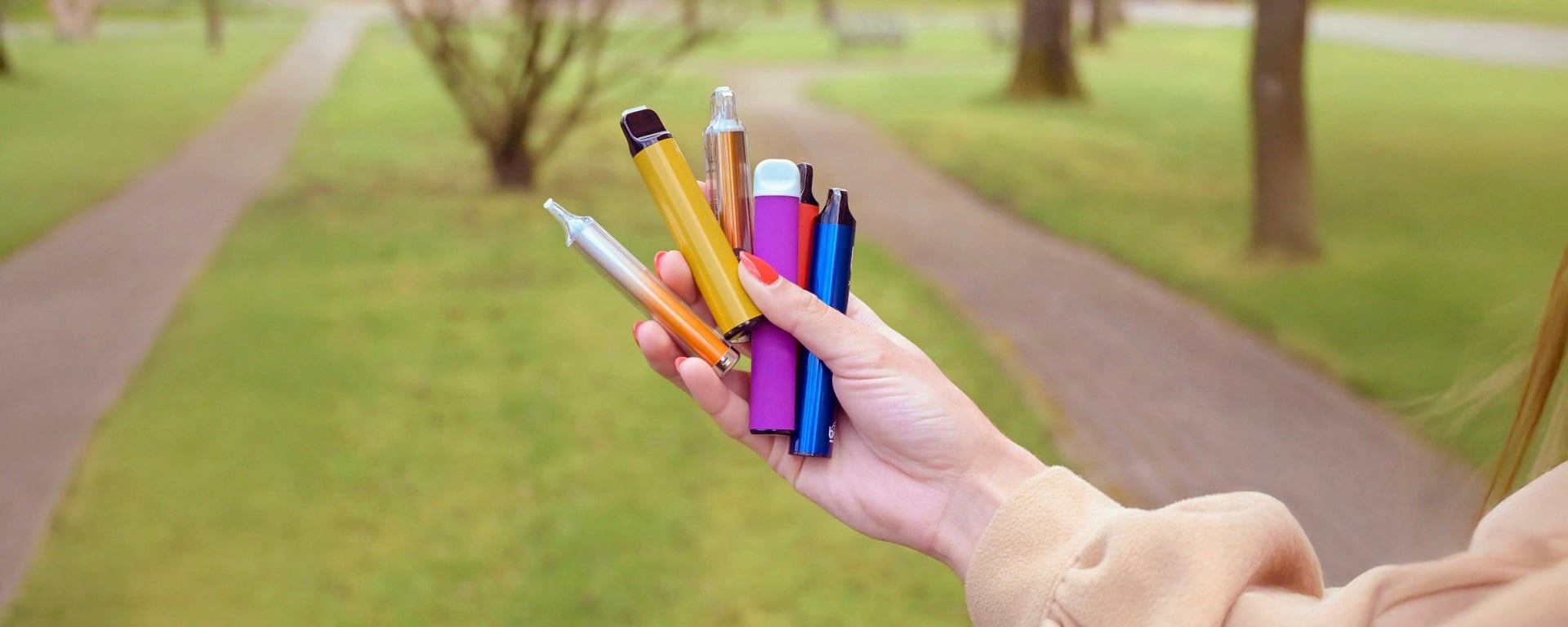
On 1 January 2024, the Netherlands introduced a flavour ban on e-cigarettes (also known as vapes). Since then, the Dutch Food and Consumer Product Safety Authority (NVWA) has been enforcing the ban on the sale of flavoured vapes in the Dutch market.
What does the flavour ban entail?
In the Netherlands, the sale of vapes and e-liquids with flavours such as cola, peach, cotton candy, or mango is prohibited. Only tobacco flavour is allowed.
The sales ban also applies to:
- accessories such as flavourings and beads used to add flavour to e-liquids
- separate flavoured mouthpieces for use in e-cigarettes
It is also not allowed to indicate the flavour on the packaging. This makes enforcement more efficient, as no laboratory testing is required. Enforcement can be based on the packaging of the e-cigarette. Naming tobacco flavours on the packaging of vapes or e-liquids is also prohibited.
Why is there a ban on flavoured vapes?
Electronic cigarettes (vapes) are addictive and harmful, and their flavours make them attractive to use. As both adults and youth like sweet and fruity flavours in particular, e-cigarette use can be discouraged by banning such flavours. In order to discourage e-cigarette use among young people and non-smokers, the Dutch government implemented a flavour ban on e-cigarettes.
Action plan against vaping
This policy is an important step in reducing e-cigarette use among youth. The Dutch government also developed a comprehensive action plan to further decrease vaping. The Action plan against vaping is available (in Dutch).
Legislation of the flavour ban
The flavour ban allows only e-cigarettes and e-liquids with tobacco flavour or no flavour on the market. This has been done by strictly limiting the number of permitted flavour-enhancing additives in e-cigarettes. The core of the legislation is an exhaustive list of 16 flavour-enhancing additives permitted as ingredients in nicotine-containing and non nicotine containing liquids.
The full legal text (in English) is available on the website of the European Commission.
List of allowed flavouring ingredients
The National institute for Public health and the Environment (RIVM) designed the restrictive list of allowed flavouring ingredients. To create the list, the RIVM developed 5 criteria:
- Flavourings must be commonly found in tobacco-flavoured liquids.
- Flavourings are used more often tobacco-flavoured liquids than in other flavours.
- Plant-based extracts are excluded due to inconsistent composition.
- The flavour must resemble tobacco or be found in tobacco (smoke).
- The substance must not be proven harmful to health.
By applying these criteria to ingredient data of e-cigarettes submitted for the Dutch market, the RIVM established a final list of 16 flavouring additives that are allowed in e-cigarettes.
Enforcement
During the drafting of the ban by the Ministry of Health, Welfare and Sport, the enforcement agency, the Netherlands Food and Consumer Product Safety Authority (NVWA), was involved to discuss its enforceability. The Authority has been enforcing the ban since 1 January 2024. Read more about the enforcement below.
Impact on consumer behaviour and purchasing
RIVM evaluated the impact of the flavour ban on e-cigarette use and purchasing behaviour. To do this, a survey was conducted among a large sample of Dutch adolescents and adults, 9 months after the ban went into effect. These were the results of the survey:
- 22% of e-cigarette users quit vaping.
- 33% of e-cigarette users attempted to quit.
- There was no population-wide shift to alternative products.
Many of those who still use flavours purchase them across the border. International adoption of flavour bans may restrict cross border purchasing. The impact on preventing new users is still being evaluated. Overall, the e-cigarette flavour ban effectively reduced e cigarette use, potentially benefiting public health.
Enforcement of the flavour ban
The Netherlands Food and Consumer Product Safety Authority (NVWA) began enforcement in 2024 at the start of the supply chain — targeting manufacturers, importers, and distributors of vapes. Shortly afterwards, enforcement was extended to (online) retailers and social media platforms. Read about the results of our inspections in the first half of 2024.
In addition to issuing fines, the NVWA has the power to confiscate and destroy non-compliant products. Enforcement operations are conducted in collaboration with other organisations, such as customs, the police, and local municipalities.
Pictures of confiscated vapes
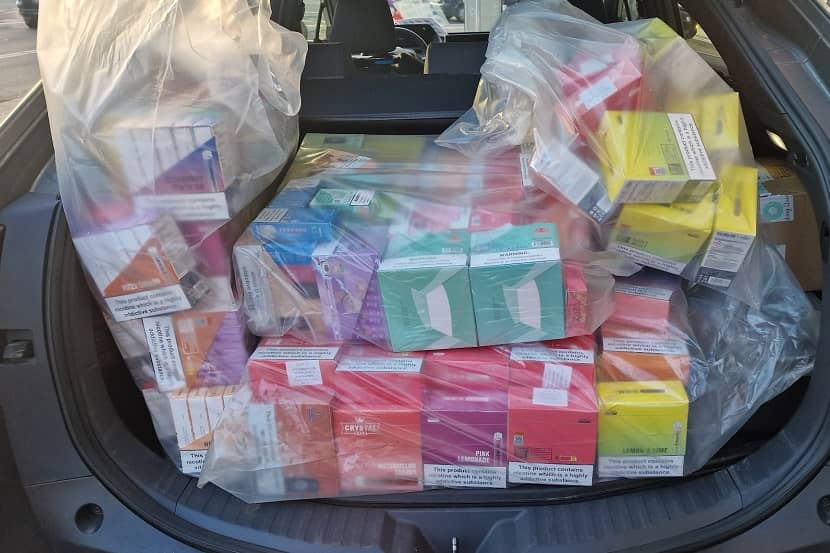
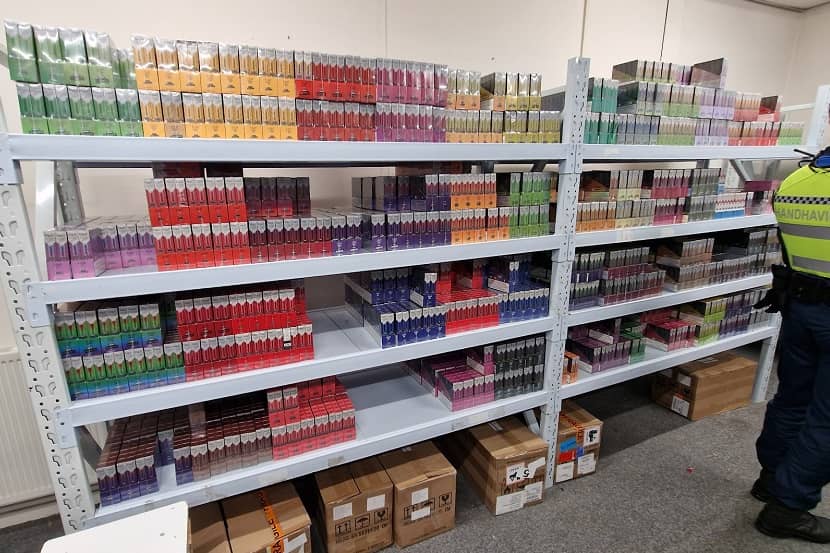
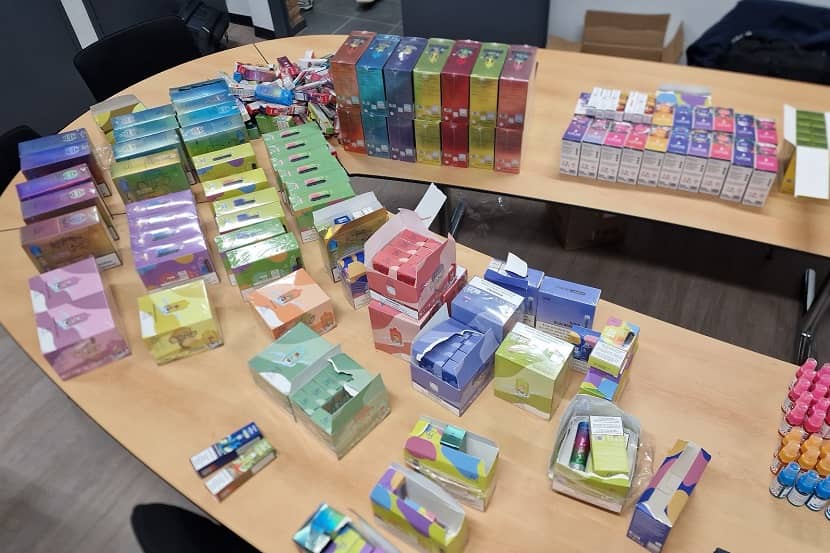
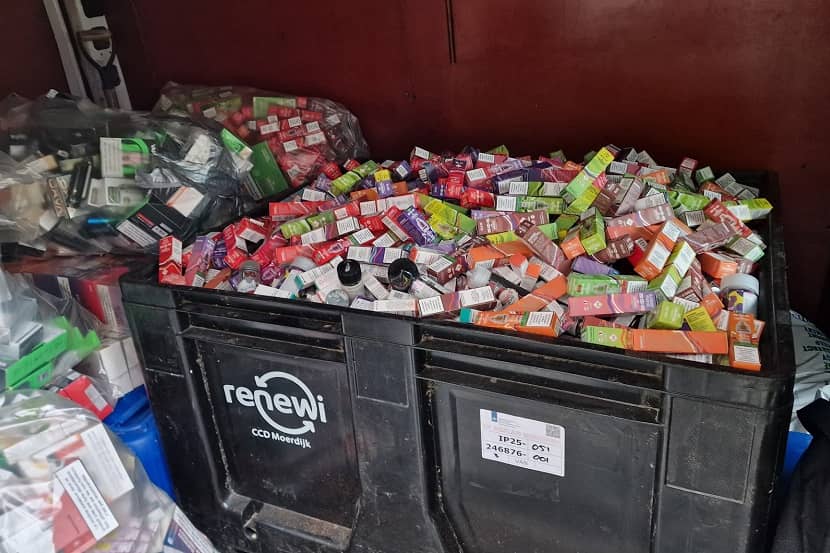
It is important to note that enforcement isn’t the only solution to the problem of young people vaping. Besides enforcement, it is also necessary to focus on prevention and vaping cessation support.
How does the NVWA enforce the illegal trade of flavoured vapes?
While the majority of manufacturers, importers, distributors, and retailers comply with the flavour ban, some (online) sellers continue to offer illegal flavoured vapes. Not only do regular shops still sell these products, but dealers on the streets, at schools, or at festivals also sell vapes to young children. What do we do about this?
In our enforcement, we distinguish 5 different priorities:
- customs/import
- storage
- regular shops
- dealers
- online (including social media)
Customs/import
Flavoured vapes are still allowed to be imported into the Netherlands. At the border, customs often intercepts large shipments of vapes. The Netherlands Food and Consumer Product Safety Authority (NVWA) has made agreements with Dutch Customs: if customs knows about a large shipment of vapes, or if they accidentally find one, they contact the NVWA. The enforcement agency then determines who the shipment is for and what will happen to it. If the shipment is intended for the Dutch market, inspectors will prevent it from entering, for example by seizing the products.
Storage
The NVWA receives signals and notifications from municipalities or police officers about storage units containing flavoured vapes. If these vapes are intended for the Dutch market, inspectors can take enforcement action and seize the products.
Regular shops
Some regular shops in the Netherlands are still selling flavoured vapes to customers. The NVWA conducts inspections at these shops. Sometimes also mystery shoppers are used to purchase a flavoured vape before an inspector enters the shop. This way, it is confirmed that flavoured vapes are being sold to customers. As enforcement actions, the NVWA can issue fines and seize the products.
Dealers
In the Netherlands, dealers are also selling flavoured vapes. They appear on schoolyards, near festival entrances, or on the streets. Some dealers even sell from their homes. In 2024 and 2025, the NVWA has visited several festivals. If inspectors catch dealers selling vapes, the enforcement agency seizes the vapes and issues fines.
Online
An online sales ban has been in place in the Netherlands since 2023. Therefore, websites selling vapes or tobacco products are forbidden. Inspectors enforce this ban by issuing fines.
Also social media platforms are inspected. On some platforms, the enforcement agency is a 'trusted flagger'. If inspectors request a post to be taken offline — because it contains vapes or the user is selling them — the social media platform will remove the post. In 2024, inspectors removed over 1,800 posts from social media platforms. In 2025, this effort is being continued. It would be better if social media platforms took their own action against online dealers through active screening. The NVWA is in contact with some platforms and is trying to make agreements about this active screening.